Get to know merino
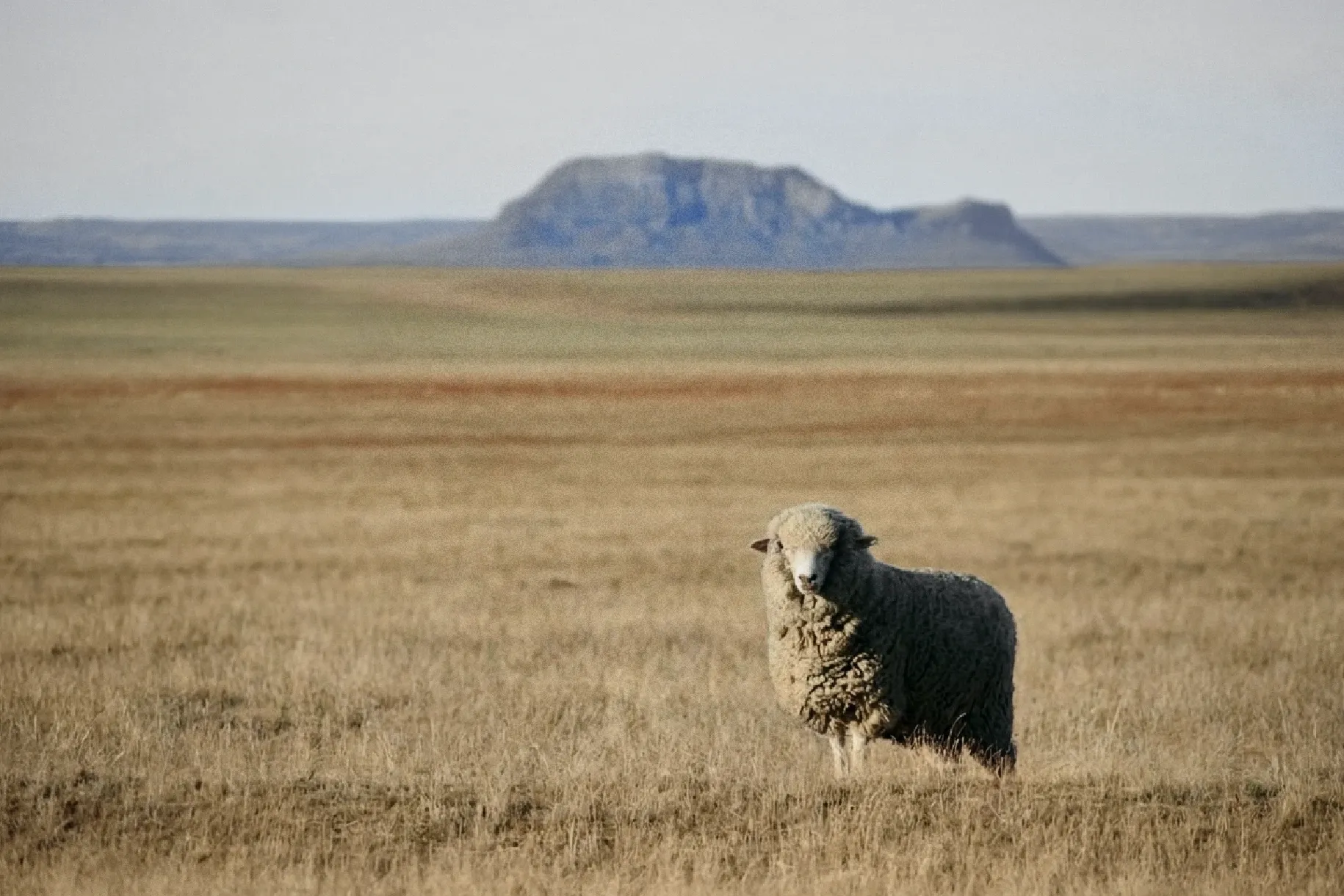
Merino wool comes from merino sheep, a breed that originated in Spain and is now raised mainly in Australia and New Zealand. These sheep grow a much finer fleece than ordinary sheep, which makes merino softer, lighter and more comfortable next to the skin than the wool most people picture.
Its main benefits:
- Soft on the skin, without the itch of regular wool
- Regulates temperature, keeping you warm in winter and cool in summer
- Handles moisture, absorbing sweat vapour so it stays comfortable when you are active
- Resists odour, so it can be worn several times between washes
- Wrinkles very little, which makes it easy to pack and travel with
- Natural and renewable, grown by the sheep every year
Why merino feels different
Merino is wool, but not the wool most people picture.
The difference is fibre thickness, and it can be measured. Wool fibres are sized in microns, a thousandth of a millimetre. A human hair is roughly 60 to 80 microns. Merino sits at roughly 15 to 24. Coarse wool, the stuff of scratchy childhood jumpers, goes well past 30. (We go into the details in our article on microns and weights.)
That one number changes everything. It’s the difference between a jumper you tolerate and a top you forget you’re wearing.
And merino isn’t some new trend. People have been wearing wool for thousands of years. What’s new is how fine we can spin it, and how cleverly we can knit it.
One piece, every season
In winter, it’s the warm layer under your jumper. It holds heat, and it keeps holding it even when you’ve been sweating. The fibre can soak up around a third of its weight in moisture vapour without feeling wet. That’s why you don’t get that damp, cold-back feeling.
In summer, the same trick works the other way. It moves sweat off your skin and lets it go, so you stay cooler and less sticky.
And in between? It’s on the trail. It’s on a run. It’s under a shirt at the office. It’s on the sofa on a lazy Sunday.
A few quiet superpowers make this possible:
- It doesn’t hold smells. You can wear it more than once before washing. Honestly, more than twice.
- It barely wrinkles. Roll it into a bag, pull it out, wear it. Done.
- It handles temperature swings. Hot, cold, moving, still. It keeps adjusting.
The odour point is the one people find hardest to believe, so here is a real example. A customer recently told us he wore one of our merino tops for seven days straight on an expedition [add expedition details], and it still didn’t smell bad at the end of the week. He couldn’t believe it. On earlier trips with synthetic tops, he had to pack a fresh one for almost every day, because after a single day they felt unpleasant to put back on. This time, one piece was enough, and his pack was much lighter for it.
That’s what makes merino one of the most versatile materials you can own. Not “good at one thing.” Good at almost everything.
The fibre is only half the story
Two “merino” tops can feel completely different. It comes down to how the fibre is treated:
- Micron. Finer is softer against your skin. For anything worn right next to bare skin, look for roughly 20 microns or under.
- Weight and knit. A light, open knit breathes in summer. A heavier, denser one keeps you warm in winter. Same fibre, different job.
- How the yarn is spun. Some yarns wrap merino around a thin nylon core. You still feel the wool, but the garment gets much tougher.
That’s why we’re picky about every one of these. Merino can be amazing. But only if you treat it right.
Is it better than synthetic at everything?
Not at everything. It has strengths and weaknesses:
| Merino | Synthetic (polyester, nylon) | |
|---|---|---|
| Next-to-skin feel | Soft, “second skin” | Fine, can feel plasticky |
| Odour | Stays fresh for days | Holds smells fast |
| Warm when damp | Yes | Less so |
| Stop-and-go activity | Keeps temperature steadier | Cools fast when you stop |
| Drying speed | Slower | Faster |
| Toughness | More delicate | Very tough |
| Price | Higher upfront | Lower |
During hard exercise, they actually perform about the same. A study led by North Carolina State University with Woolmark found that. Merino’s real edge shows up in the in-between moments: when you stop, cool down, start again.
And shrinking? People panic about this one. Follow the care label (cool wash, gentle cycle, dry flat) and good merino shrinks very little, around [X%]. Treat it badly in a hot dryer, though, and yes, it’ll punish you.
Something natural, right on your skin
The layer closest to your body is the one you wear longest. All day. Sometimes all night. And for years, most of our sportswear has been plastic-based.
Merino is a natural fibre grown by sheep, not made from plastic. It breathes like a natural fibre. It feels like one. If you’ve spent years in synthetic gym tops, you’ll notice the difference the first day.
It’s not the only reason to choose merino. But for many people, it’s an important one.
FAQ
No. Itch is caused by thick fibres that stay stiff and press into the skin. For most people the threshold is around 25 to 30 microns, and good merino sits below it. More on this in our article Is merino wool itchy?
No. Merino moves moisture vapour away from the skin, which keeps you cooler and drier in the heat. It works well on summer hikes and in warm climates.
Yes. In a peer-reviewed study led by North Carolina State University with Woolmark, merino base layers kept body temperature more stable than synthetics, both during exercise and at rest.
Not really. It costs more than a basic synthetic top, but one piece covers more seasons and activities, so the cost per wear is often lower than expected.