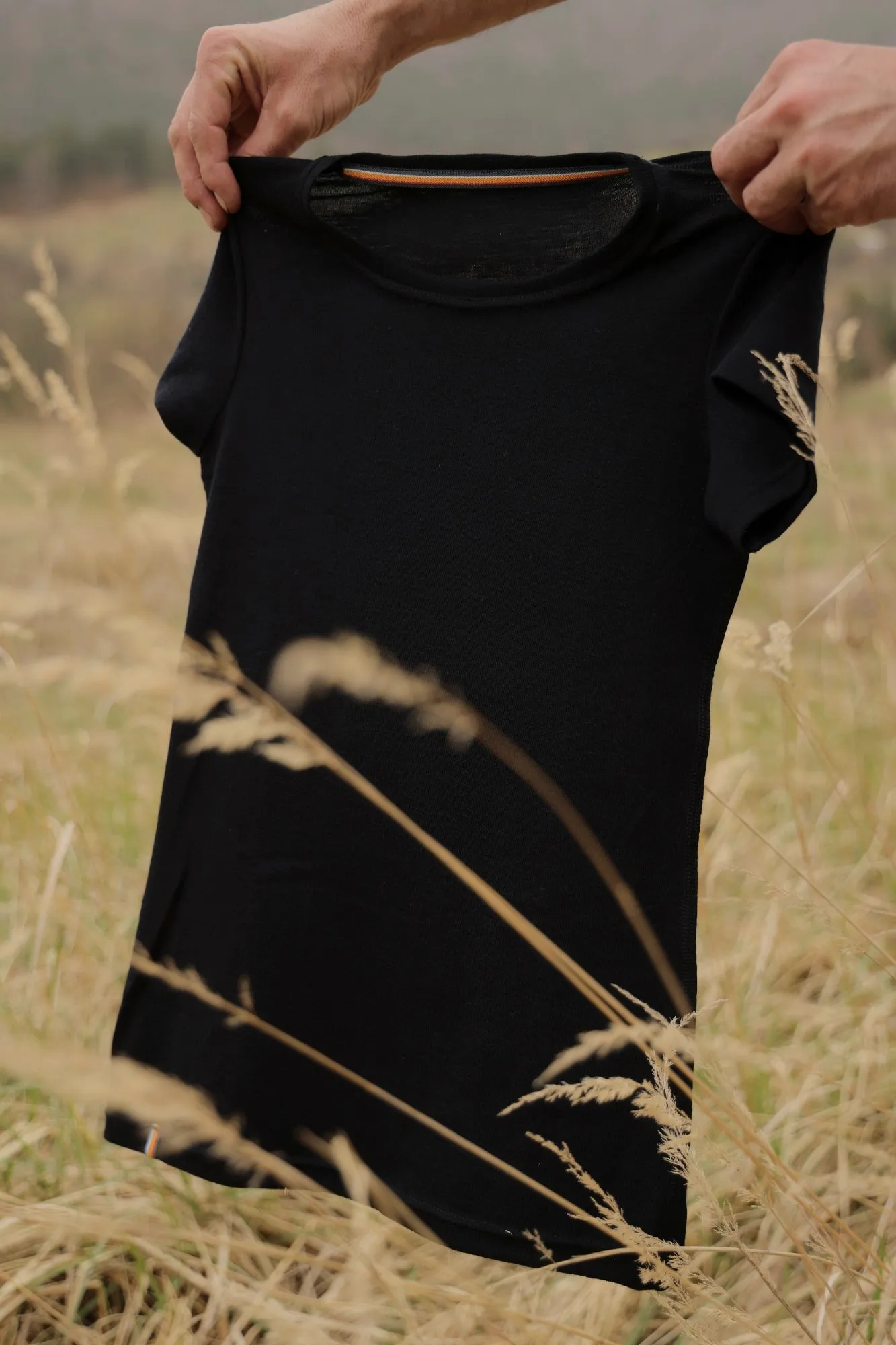
How to wash merino wool
Merino wool is easier to care for than most people expect. Shrinking, felting and holes almost always come from a few avoidable causes: heat, agitation, harsh detergents and the tumble dryer.
This guide covers how often to wash merino, how to machine wash and hand wash it, how to dry it, and what to do when something goes wrong.
Wash less often than you think
Merino resists odor better than synthetic fabrics. The fibers absorb moisture vapor and move it away from the skin, which leaves less damp surface for odor-causing bacteria. A lightly worn merino T-shirt or base layer can usually be worn several times between washes.
After wearing, hang the garment somewhere with airflow overnight. If it smells clean the next day, it does not need washing yet.
Every wash causes some wear on the fibers. Washing only when needed is the simplest way to extend the life of a merino garment.
Check the care label first
Merino garments fall into two groups:
- Machine-washable (often labeled superwash). Most base layers, socks and activewear are treated so the fibers do not felt in a washing machine.
- Untreated wool. Common in heavier knits and some sweaters. It felts quickly when exposed to heat and agitation, so hand washing is usually required.
Always follow the label when it gives specific instructions.
How to machine wash merino
For garments labeled machine-washable:
- Turn the garment inside out to reduce surface friction and pilling.
- Use the wool or delicate cycle with cold water, or 30°C at most.
- Choose a low spin speed to limit stretching and fiber damage.
- Use a mesh laundry bag for extra protection.
- Wash with similar light items. Keep merino away from jeans, zippers, hooks and Velcro, which snag and pull the fibers.
Much of the wear on merino comes from abrasion against other items in the load, not from the wash itself.
Choosing a detergent
Wool is a protein fiber made of keratin. Many standard detergents contain enzymes, particularly proteases, that are designed to break down protein-based stains. Over repeated washes, these enzymes also degrade wool fibers.
Use a dedicated wool wash or a mild, enzyme-free detergent. Do not use bleach.
Avoid fabric softener. It coats the fibers and reduces merino’s ability to manage moisture.
How to hand wash merino
Hand washing is recommended for untreated wool and delicate knits.
- Fill a basin with lukewarm water.
- Add a small amount of wool wash and mix it in.
- Submerge the garment and let it soak for about 10 minutes.
- Gently press the water through the fabric. Do not scrub or rub.
- Rinse in clean water at the same temperature.
- Press out excess water without wringing or twisting.
- Lay the garment on a dry towel, roll the towel up, and press to absorb remaining moisture.
Keep the wash and rinse water at the same temperature. Sudden temperature changes contribute to felting.
How to dry merino
The tumble dryer is the most common cause of shrinkage. Do not tumble dry unless the label explicitly allows it, and then only on low heat.
- Dry flat. Lay the garment on a towel or drying rack and reshape it while damp.
- Light items can hang. T-shirts and base layers are light enough to line dry without stretching.
- Do not hang heavy knits. The weight of the water stretches them out of shape.
- Avoid direct heat. Keep merino away from radiators, heaters and strong direct sunlight.
Lightweight pieces typically dry overnight. Heavier knits can take a day or longer.
What to do if merino has shrunk
Mild shrinkage can often be partly reversed:
- Fill a basin with lukewarm water and add a capful of hair conditioner.
- Soak the garment for 20 to 30 minutes to relax the fibers.
- Gently press out the water without rinsing.
- Lay the garment flat on a towel and carefully stretch it toward its original shape.
- Reshape it periodically as it dries.
This works best on garments that have shrunk slightly. Fully felted wool, where the fibers have permanently bonded, cannot be restored.
Stains, holes, storage and wrinkles
Stains. Treat them early by dabbing with cold water and a little wool wash. Spot cleaning often removes the need for a full wash.
Holes. Repair small holes promptly before they spread. Darning works well on merino, and many brands offer repair services.
Storage. Moths are attracted to residues of sweat, skin and food on wool. Wash garments before storing them for the season, then store them clean and folded in a sealed bag or container. Cedar can help deter moths.
Wrinkles. Merino rarely needs ironing. Hanging it in a steamy bathroom usually releases creases. If you do iron, use a low wool setting with a cloth between the iron and the garment.
Key takeaways
- Wash merino only when it needs it. Airing it out is often enough.
- Use cold water, a gentle cycle and an enzyme-free wool detergent.
- Skip bleach, fabric softener and the tumble dryer.
- Dry flat, away from direct heat.
The next time you take off a merino garment, air it out instead of washing it. Most of the time, that is all it needs.