
Merino microns and weights, explained
Two numbers decide how a merino garment feels and performs: the micron, which is how thick each fibre is, and the weight, which is how much fabric there is. Once you can read both, a merino label tells you almost everything you need to know.
What a micron is
A micron is one thousandth of a millimetre. In wool it measures the average diameter of the fibres in a fleece, and it is the single biggest factor in the price of raw wool: the finer the fibre, the rarer it is and the more it costs.
Merino fibres measure roughly 15 to 24 microns. For scale, a human hair is around 50 to 100 microns, standard sheep’s wool 25 to 40, and cashmere 14 to 19. The finest merino is as fine as most cashmere.
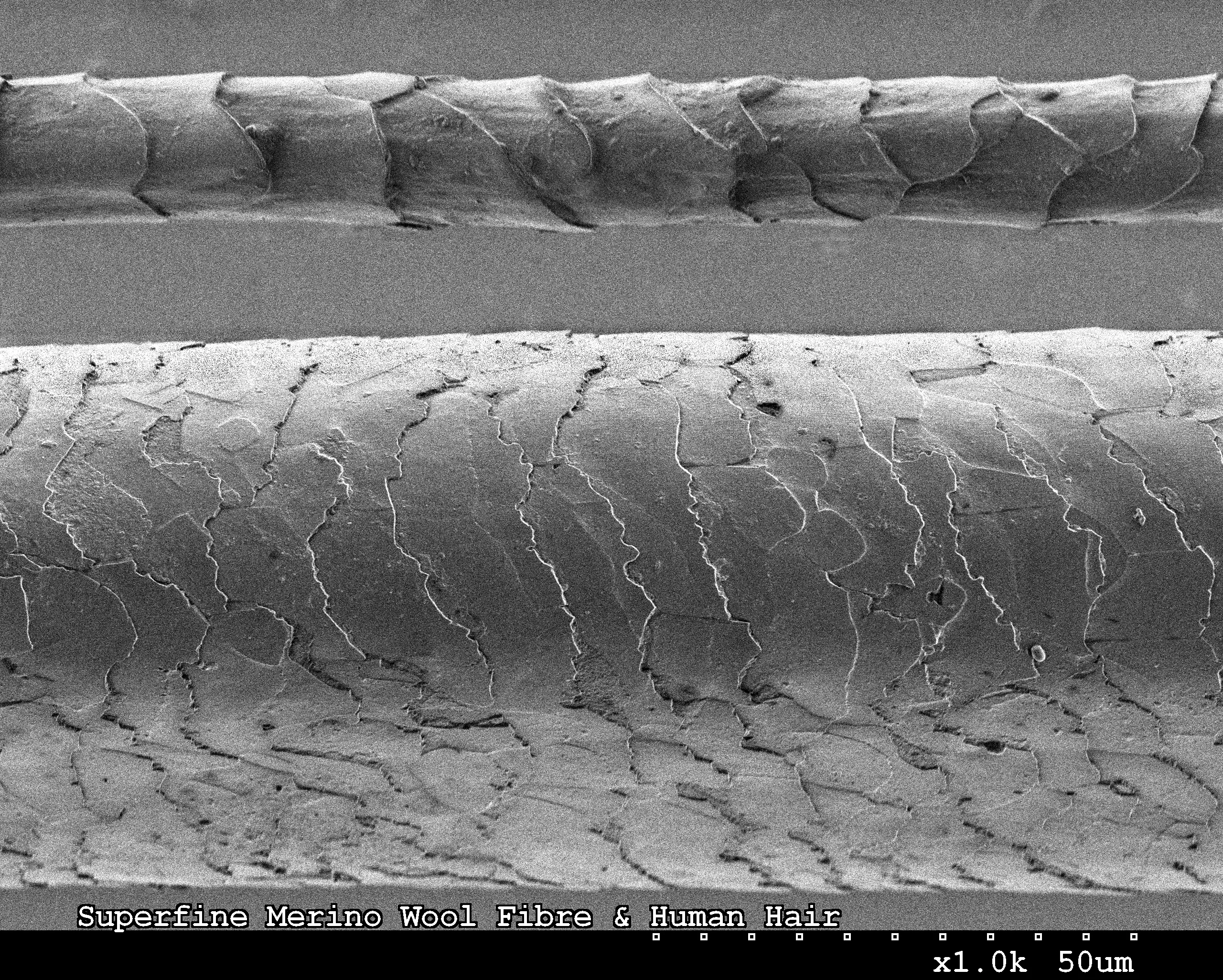
Merino grades
Merino is sold in grades by its average micron. These are the categories commonly used in the Australian wool trade, where most of the world’s merino is grown:
- Ultrafine, under 15.5 microns: luxury knitwear and fine suiting.
- Superfine, 15.5 to 18.5: next-to-skin base layers and underwear.
- Fine, 18.6 to 19.5: base layers, T-shirts and socks.
- Fine medium, 19.6 to 20.5: mid-layers and heavier tops.
- Medium, 20.6 to 22.5: sweaters and outerwear.
- Strong, over 22.5: blankets, upholstery and outer fabrics.
Ranges vary with the animal, the season and the part of the fleece, so treat them as typical bands rather than fixed values.
Why fine merino doesn’t itch
The prickle people associate with wool comes from fibre diameter, not from wool itself. When the cut end of a fibre presses against skin, a thin fibre bends away. A thick one, above roughly 30 microns, is stiff enough to push back and trigger the nerve endings that read as itch.
The industry measures this with the comfort factor: the share of fibres in a yarn that are under 30 microns. Fabric at 95% or more is generally comfortable against bare skin, and fine merino is usually well above that. That’s why a 17.5-micron base layer feels nothing like a traditional wool jumper.
Fabric weight
Weight is given in grams per square metre, written GSM or g/m². It tells you how much fibre is in the fabric, so it is the best single guide to warmth. Knit structure matters too: a waffle or rib traps more air than a flat jersey of the same weight.
- 120 to 150 g/m², lightweight: summer, running, high effort, layering under a shell.
- 150 to 200 g/m², light midweight: three-season hiking, travel, everyday wear.
- 200 to 260 g/m², midweight: cool to cold days, ski touring, a warm base layer.
- 260 g/m² and up, heavyweight: very cold or low-effort days, standing around in winter.
As a rule of thumb, go lighter the harder you’ll be working. A heavyweight top on a fast uphill traps more heat and sweat than it can move.
Choosing by the numbers
Base layers
For a layer worn against the skin all day, look for 17 to 19.5 microns at a weight that matches your effort: around 150 g/m² in summer or on the move, 200 to 260 when it’s cold. If you only own one, 200 g/m² covers the widest range.
Socks
Socks take more abrasion than anything else you wear. A slightly coarser fibre or a nylon-reinforced yarn wears far better at the heel and toe, and the difference in softness is barely noticeable through a shoe.
Mid-layers
A sweater or fleece that never touches bare skin can sit at 19.5 to 22.5 microns. It is still soft, and it lasts longer.
Finer isn’t always better
Ultrafine merino is the softest wool you can wear, but thin fibres are also weaker. They pill and wear through sooner where a garment rubs: under a pack strap, at the elbows, at the heel of a sock.
So many merino garments either blend in a little nylon, often as a core the merino is wrapped around, or step up a micron or two where durability matters more than softness. Neither is a compromise if it is chosen for the right garment.
Questions
No. At 18.5 microns almost all the fibres are far below the 30-micron threshold where prickle starts, so it is comfortable against bare skin for nearly everyone.
Not by itself. Warmth comes mostly from fabric weight and knit structure, because those decide how much still air the garment holds. Micron mainly changes how soft the fabric feels and how well it wears.
For most people, around 150 g/m² for warm weather or high effort and 200 to 260 g/m² for cold conditions. If you only own one, a 200 g/m² base layer covers the widest range.
They overlap. Cashmere usually measures 14 to 19 microns and superfine merino 15.5 to 18.5, so the finest merino is as fine as most cashmere.
It refers to the grade of the wool: an average fibre diameter between 15.5 and 18.5 microns.